Source Stainless Steel T Head Bolts for Machinery, Building, Chemical
Compare 30 listings of stainless steel t head bolts suitable for machinery, building, and chemical industry applications. Buyers can evaluate specifications like DIN standards, polishing finishes, and custom sizes from verified Chinese suppliers; compare the available evidence and request quotations based on your requirements.
Key considerations
Products List




Comprehensive Sourcing Guide
Stainless Steel T Head Bolts Sourcing Guide
Product Scope and Observed Listing Signals
The market for stainless steel t head bolts presents a distinct subset within the broader fastener industry, characterized by specialized head geometries designed for sliding or locking applications in machinery and structural assemblies. While the core keyword specifies stainless steel, observed listing signals reveal a complex supply landscape where material specifications vary significantly across different supplier catalogs. Buyers must carefully distinguish between products explicitly labeled as stainless steel and those described as carbon steel with various plating finishes, such as blue-white zinc or color-zinc plating, which are frequently listed alongside stainless options. This overlap requires rigorous scrutiny of product descriptions to ensure the selected fasteners meet the corrosion resistance and mechanical strength requirements of the intended application, particularly in chemical or environmental settings where material degradation is a critical concern.
Observed packaging and origin data provide additional context for sourcing decisions, with many suppliers indicating origins in major Chinese manufacturing hubs like Shanghai, Ningbo, and Tianjin. Packaging methods range from small boxes with plastic bags to bulk 25kg bags on wooden pallets, reflecting the diverse scale of procurement needs from small component assemblies to large industrial projects. The presence of customization options and varied standard compliance, including DIN, ANSI, and GB, suggests a flexible supply chain capable of meeting specific engineering drawings. However, the coexistence of these diverse product attributes in search results underscores the necessity for buyers to verify the exact material grade and finish of each order, as the visual similarity between plated carbon steel and stainless steel components can lead to procurement errors if not explicitly confirmed during the inquiry phase.
Technical Specifications to Verify
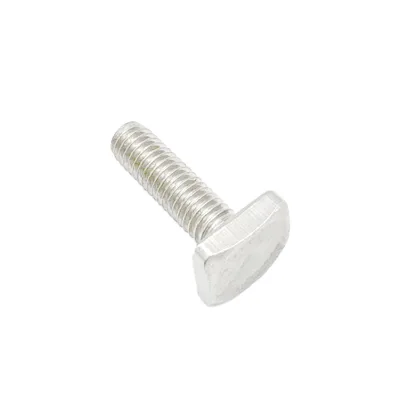
Verifying the precise technical specifications of t head bolts is paramount to ensuring functional compatibility and structural integrity in machinery applications. Buyers should prioritize the confirmation of thread size and length, as observed listings indicate a wide range of available models, including M6x50, M8x50, and M12x60, alongside broader ranges like M5-M16 or M6-M30. The head style is another critical dimension, with square head variants and specific t-head geometries requiring exact measurement against engineering drawings to prevent assembly failures. Additionally, the verification of grade and material composition is essential; while stainless steel is the target, some listings reference carbon steel grades such as Grade 8, which possess different tensile strengths and corrosion profiles. Ensuring that the selected bolt matches the required load-bearing capacity and environmental exposure conditions prevents premature failure and maintains the safety of the final assembly.
Surface finish and manufacturing processes also play a significant role in the performance and longevity of these fasteners. Polishing is a common finish for stainless steel variants, enhancing both aesthetic appeal and corrosion resistance, whereas zinc-plated options offer a different protective layer for carbon steel bases. Buyers must confirm whether the finish is applied before or after threading, as this can affect thread engagement and torque values. Furthermore, the availability of customized headmarks and specific hinge types, such as 360° hinges with ball or washer bearings, indicates a niche market for specialized mechanical connections. Understanding these nuanced technical details allows procurement teams to select components that not only fit physically but also perform reliably under the operational stresses of machinery, chemical processing, or building construction, thereby reducing maintenance costs and downtime.
Compliance and Safety Documentation
Navigating the compliance landscape for stainless steel t head bolts requires a thorough understanding of the international standards that govern fastener manufacturing and quality assurance. Suppliers often cite compliance with major standards such as DIN, ANSI, GB, BSW, JIS, and GOST, each of which dictates specific dimensional tolerances, mechanical properties, and testing procedures. Buyers must verify which standard applies to their specific application, as mismatched standards can lead to interoperability issues in global supply chains or regulatory non-compliance in domestic markets. The presence of certifications like CE, ISO9001, and SGS provides a baseline assurance of manufacturing quality and process control, but these certifications do not automatically guarantee that every batch of bolts meets the specific performance criteria required for critical machinery or structural applications. Therefore, documentation review should extend beyond general certifications to include batch-specific test reports and material certificates.
Safety and regulatory adherence are further complicated by the diverse applications of t head bolts, ranging from general machinery to chemical industry equipment where corrosion resistance is vital. Buyers should request detailed material test reports that confirm the chemical composition of the stainless steel, ensuring it meets the required grade specifications for corrosion resistance and mechanical strength. In industries with strict environmental or safety regulations, such as building construction or chemical processing, additional documentation may be required to demonstrate compliance with local codes and industry-specific safety standards. The absence of explicit test results in general listings highlights the need for proactive verification by the buyer, who must ensure that the supplied fasteners have undergone appropriate quality checks, including tensile strength testing and hardness verification, to mitigate risks associated with fastener failure in critical applications.
Cost Drivers and Commercial Terms
Understanding the cost drivers for stainless steel t head bolts involves analyzing the interplay between material costs, manufacturing complexity, and commercial terms. The price range observed in listings, spanning from low-cost items to those exceeding $1200, reflects the vast differences in quantity, specification, and customization level. Material costs for stainless steel are inherently higher than for carbon steel, and the specific grade, such as 304 or 316, further influences the base price. Manufacturing processes, including polishing and precise threading, add to the production cost, while customization options like specific headmarks or non-standard dimensions can significantly increase unit prices. Buyers must evaluate these factors in the context of their total cost of ownership, considering not just the unit price but also the potential costs associated with quality failures, maintenance, and replacement in the field.
Commercial terms, including minimum order quantities (MOQ) and delivery times, also impact the overall procurement strategy. Observed MOQs range from as low as one unit to as high as 10,000 units, offering flexibility for both prototype development and large-scale production runs. Delivery times, typically cited as 7-15 workdays, suggest a relatively agile supply chain, but buyers should confirm lead times for customized orders or large volumes to avoid production delays. Packaging costs, which vary from simple plastic bags to robust wooden pallets, should be factored into the total landed cost, especially for international shipments. By negotiating clear commercial terms and understanding the cost structure, buyers can optimize their procurement strategy to balance cost efficiency with supply chain reliability, ensuring that they receive the required fasteners at a competitive price without compromising on quality or delivery schedules.
Supplier Qualification and Quality Control
Supplier qualification is a critical step in mitigating procurement risks, particularly when sourcing specialized components like stainless steel t head bolts from international markets. Buyers should prioritize suppliers with established track records in the fastener industry, verified by certifications such as ISO9001 and SGS, which indicate a commitment to quality management systems. However, certifications alone are insufficient; buyers must conduct thorough due diligence to assess the supplier’s manufacturing capabilities, quality control processes, and ability to meet specific technical requirements. This includes verifying the supplier’s access to raw materials of the correct grade and their ability to perform necessary testing, such as tensile strength and corrosion resistance tests, in-house or through accredited third-party laboratories. Engaging with suppliers who offer samples allows buyers to physically inspect the product quality, verify dimensions, and assess the finish before committing to a larger order.
Quality control measures should be integrated into the procurement process to ensure consistent product quality across batches. Buyers should establish clear quality acceptance criteria, including dimensional tolerances, surface finish requirements, and material composition standards, and communicate these expectations to the supplier in writing. Implementing pre-shipment inspections or hiring third-party inspection services can provide an additional layer of assurance, verifying that the delivered goods meet the agreed-upon specifications. Furthermore, maintaining open communication with the supplier regarding any quality issues or deviations allows for timely corrective actions and continuous improvement. By adopting a proactive approach to supplier qualification and quality control, buyers can build a reliable supply chain that delivers high-quality stainless steel t head bolts, reducing the risk of defects and ensuring the long-term performance of their machinery and structures.
Long-Term Procurement Checks
Establishing long-term procurement checks is essential for maintaining supply chain resilience and ensuring the continued quality of stainless steel t head bolts over time. Regular audits of supplier performance, including on-time delivery rates, defect rates, and responsiveness to issues, provide valuable insights into the reliability of the supply relationship. Buyers should also monitor market trends and material price fluctuations to anticipate cost changes and adjust procurement strategies accordingly. Periodic re-verification of supplier certifications and quality management systems ensures that the supplier continues to meet evolving industry standards and regulatory requirements. Additionally, maintaining a diverse supplier base can mitigate the risk of supply disruptions, allowing buyers to switch sources if necessary without compromising production schedules.
Continuous improvement in procurement practices involves leveraging data from past purchases to refine specifications and negotiate better terms. Analyzing usage patterns and failure data from the field can inform decisions about material upgrades or design modifications, leading to more robust and cost-effective solutions. Buyers should also foster collaborative relationships with suppliers, sharing feedback and working together to solve technical challenges or improve product performance. By implementing a structured approach to long-term procurement checks, organizations can build a sustainable supply chain that supports their operational goals, reduces total cost of ownership, and enhances the overall reliability of their machinery and infrastructure. This proactive stance ensures that the procurement function remains a strategic asset, contributing to the competitive advantage and operational excellence of the business.
FAQs
What sizes are available for stainless steel T head bolts?
Listed sizes commonly include M6, M8, M10, and M12x60, with some ranges covering M5-M16 and lengths from 25mm to 300mm. Suppliers can often accommodate custom dimensions on request, so confirm your required diameter and length before ordering. Samples are available from some listings to verify fit before committing to volume production.
Which finishes can buyers choose for T head bolts?
Common finishes include polishing and plating options such as blue-white zinc plating and color-zinc plating. Carbon steel versions are typically plated, while stainless steel versions often receive a polished finish. Choose the finish based on your application environment, since plating improves corrosion resistance for machinery, chemical, and building uses.
Can stainless steel T head bolts be customized?
Yes, customization is available across the listings. Buyers can specify head markings, sizes such as M6-M30, packaging preferences, and connection details. Confirm the exact specification with the supplier in writing, request a sample where possible, and agree on inspection expectations before mass production to ensure the custom bolts meet your application requirements.
What standards do these T head bolts follow?
The products reference standards including DIN, ANSI, GB, BSW, JIS, and GOST, with specific models such as DIN 603 and sizes like M8x50. When requesting quotations, state the standard your project requires so the supplier can confirm compliance. Different standards affect head dimensions and tolerances, so verification is important.
How are stainless steel T head bolts packed for shipment?
Typical packing options include small boxes with plastic bags, 25kg bulk bags, cartons at 25-30kg, and palletized configurations such as 36 cartons per pallet or cartons on wooden pallets. Specify your preferred packing when ordering, especially for export shipments, since pallet packing protects against moisture and simplifies handling at destination.
Which applications suit stainless steel T head bolts best?
Listed applications include machinery, chemical industry, environmental equipment, and building construction. The T head design allows the bolt to slide into channel slots or remain captive in fixtures, which suits adjustable assemblies. Select stainless steel material for corrosive environments and confirm grade requirements with your supplier before placing orders.
What are typical delivery times and MOQ terms?
Delivery time is commonly 7-15 workdays depending on order size and customization. MOQ ranges vary widely across listings, from as low as 1 piece for samples to large quantities for bulk production. Discuss MOQ, production capacity, and delivery schedules with each supplier early, since customized headmarks and sizes may extend lead times.
How should buyers verify quality before ordering?
Request material certificates confirming stainless steel content and grade, ask about certifications such as ISO9001 or CE where listed, and order samples to check dimensions and finish. Confirm headmark customization and connection type against your drawings. Clear inspection criteria agreed in advance reduce the risk of receiving bolts that do not fit your machinery.